
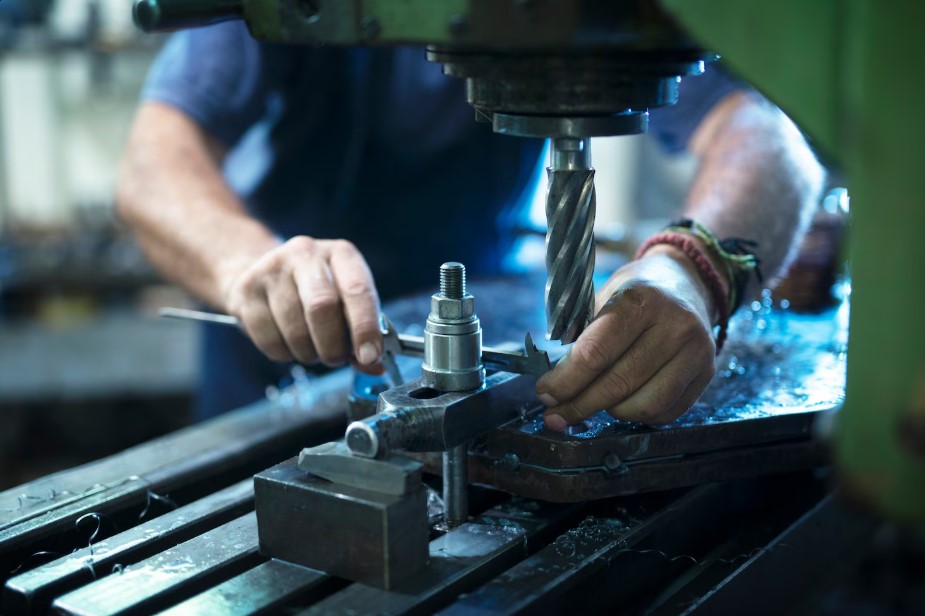
Modern machinery depends on gears more than most people realize. From automotive transmissions and industrial equipment to robotics, aerospace systems, and power-generation machinery, gears are responsible for transferring motion and torque with precision.
But producing a gear that performs reliably starts long before it is installed in a machine. The accuracy, finish, consistency, and performance of a gear depend heavily on the tools used to manufacture it. This is where gear cutting tools and gear hobs play an important role.
For manufacturers across the USA, selecting the right tooling is not simply about cutting teeth into a gear blank. It is about achieving repeatable accuracy, maintaining production efficiency, controlling tool life, and meeting the demanding requirements of modern gear manufacturing.
So, what should manufacturers know about these tools, and why are gear hobs such an important part of the gear-cutting process?
What Are Gear Cutting Tools?
Gear cutting tools are specialized tools designed to machine the teeth and profiles of gears. Unlike conventional cutting tools, they are developed specifically to create accurate tooth geometry and maintain the dimensional consistency required for proper gear operation.
Depending on the gear design, production method, material, and required accuracy, manufacturers may use different types of gear cutting tools.
These tools can be used for applications ranging from individual or low-volume gear production to high-volume industrial manufacturing.
The choice of tooling can affect several aspects of the finished gear, including:
- Tooth profile accuracy
- Surface finish
- Production speed
- Tool life
- Dimensional consistency
- Overall manufacturing cost
For U.S. manufacturers competing in industries where quality and productivity matter, choosing suitable tooling can therefore become an important part of the overall production strategy.
Why Are Gear Hobs Important in Gear Manufacturing?
Among the different types of gear cutting tools, gear hobs are widely associated with efficient and precise gear production.
A gear hob is a cylindrical cutting tool with multiple cutting edges arranged along its body. During the hobbing process, the hob and gear blank rotate in a coordinated relationship. As the cutting tool moves through the workpiece, it gradually generates the gear teeth.
One of the major advantages of gear hobbing is its ability to produce multiple gear teeth efficiently while maintaining consistent tooth geometry.
This makes gear hobs particularly valuable in production environments where repeatability and productivity are important.
Rather than treating each tooth as an isolated machining operation, the hobbing process generates the gear profile through coordinated movement between the tool and workpiece.
How Does Gear Hobbing Work?
Understanding the basic process makes it easier to appreciate why tool selection matters.
The process begins with a gear blank mounted securely on the hobbing machine. The gear hob is positioned relative to the workpiece, and the machine establishes the required relationship between their rotational movements.
As the hob rotates, its cutting edges progressively remove material from the gear blank.
The result is a series of accurately generated teeth around the circumference of the workpiece.
Several factors influence the final result, including:
- Hob design
- Gear material
- Cutting conditions
- Machine setup
- Required gear specifications
- Tool condition
- Workpiece stability
Even a high-quality gear hob needs to be used under appropriate machining conditions. Proper setup and tooling selection work together to achieve the desired result.
Gear Cutting Tools for Different Manufacturing Requirements
Not every gear manufacturing application has the same requirements.
A manufacturer producing automotive components may have different tooling needs than a company manufacturing industrial gearboxes or specialized machinery. Production volume, gear size, material, tooth geometry, and accuracy requirements can all influence the appropriate solution.
For this reason, manufacturers should avoid choosing gear cutting tools based only on initial purchase price.
A tool that provides reliable performance and longer usable life may offer greater value over the entire production cycle.
Manufacturers should consider factors such as:
Gear Specifications
The size and geometry of the gear influence the type of cutting tool required. Tooth dimensions, module or diametral pitch, pressure angle, and other design parameters need to be considered when selecting tooling.
Workpiece Material
Different materials respond differently during machining. The cutting tool must be suitable for the material being processed and the intended cutting conditions.
Production Volume
High-volume production places greater emphasis on productivity, consistency, and tool life. In lower-volume applications, flexibility and versatility may become more important.
Required Accuracy
Precision gears require carefully controlled tooth geometry and dimensions. The tooling and machining process should be selected with the required quality level in mind.
Benefits of Using the Right Gear Hobs
The right gear hob can contribute to both product quality and manufacturing efficiency.
Consistent Gear Tooth Production
A properly selected and maintained hob helps manufacturers produce gear teeth with consistent geometry across production runs.
Improved Productivity
Gear hobbing is well suited to applications where multiple gears need to be produced efficiently. Appropriate tooling can help manufacturers maintain productive machining cycles.
Reliable Tool Performance
Tool design, material, and manufacturing quality can influence how consistently a gear hob performs throughout its usable life.
Better Manufacturing Control
When the tooling is matched correctly to the machine, material, and gear specification, manufacturers can achieve greater control over the gear-cutting process.
These benefits become especially important for U.S. manufacturers serving demanding industrial markets where quality, repeatability, and production efficiency are closely connected.
What Should You Look for When Choosing Gear Cutting Tools?
Selecting gear cutting tools should be approached as a technical decision rather than a simple purchasing decision.
Before choosing a tool, manufacturers should clearly understand their application requirements.
Ask questions such as:
What type of gear are you manufacturing?
The gear design determines the tooling requirements and machining approach.
What material are you cutting?
Tooling needs can vary depending on the workpiece material and machining conditions.
What level of accuracy is required?
The tighter the requirements, the more carefully the tooling and machining process need to be controlled.
What is the expected production volume?
A tool suitable for occasional production may not be the most economical choice for continuous high-volume manufacturing.
What matters most—speed, flexibility, tool life, or a combination?
The best tooling decision usually considers the complete production process rather than focusing on one factor.
Why Tool Quality Matters for U.S. Manufacturers
Manufacturing in the USA continues to place strong emphasis on productivity, precision, and dependable production processes. Whether a company produces components for transportation, industrial machinery, automation, or other applications, gear quality can directly influence the performance of the final product.
Poorly manufactured gear teeth can contribute to problems such as improper meshing, excessive noise, vibration, premature wear, and reduced operating efficiency.
That is why gear manufacturers need dependable gear cutting tools that support consistent machining results.
High-quality gear hobs are not simply cutting accessories. They are an important part of the gear manufacturing process.
When tooling, machinery, cutting parameters, inspection, and maintenance are properly coordinated, manufacturers can build a more predictable production process.
Gear Hobs and the Future of Precision Manufacturing
Gear manufacturing continues to evolve as industries demand smaller, lighter, stronger, and more efficient components.
Modern applications can require increasingly precise gears while also placing pressure on manufacturers to improve productivity and control production costs.
This makes advanced gear cutting technology increasingly important.
Manufacturers are looking beyond simply producing a gear. They are looking for tooling solutions that can support repeatable production, reduce unnecessary downtime, and maintain the required quality over extended manufacturing runs.
In this environment, gear hobs remain an important solution for manufacturers that need efficient gear generation.
Making the Right Tooling Choice
Choosing the right gear cutting tools is ultimately about matching the tool to the application.
There is no single solution that is ideal for every gear, material, machine, or production environment. The best choice depends on understanding the specific manufacturing requirements and selecting tooling accordingly.
For manufacturers in the USA, working with an experienced tooling supplier can make this process easier. A knowledgeable supplier can help manufacturers evaluate their requirements and identify tooling that aligns with their production goals.
The right decision can support better consistency, efficient machining, dependable tool performance, and a more controlled manufacturing process.
Build Better Gears With the Right Gear Cutting Tools
A gear may look simple, but producing a precision gear requires careful attention to every stage of manufacturing.
From the initial gear blank to the finished tooth profile, tooling plays a critical role in determining the quality and consistency of the final component. Gear cutting tools provide manufacturers with the specialized capabilities needed to create accurate gear teeth, while gear hobs offer an efficient approach for generating gears in a wide range of production environments.
For U.S. manufacturers, the goal is not simply to cut gears faster. It is to produce gears consistently, efficiently, and to the specifications required by today’s demanding applications.
Choosing the right tooling is a practical step toward that goal.
If your manufacturing operation is looking for reliable gear-cutting solutions, explore the available tooling options from SS Tools and identify the solution that best fits your gear manufacturing requirements.
