
Quick Answer
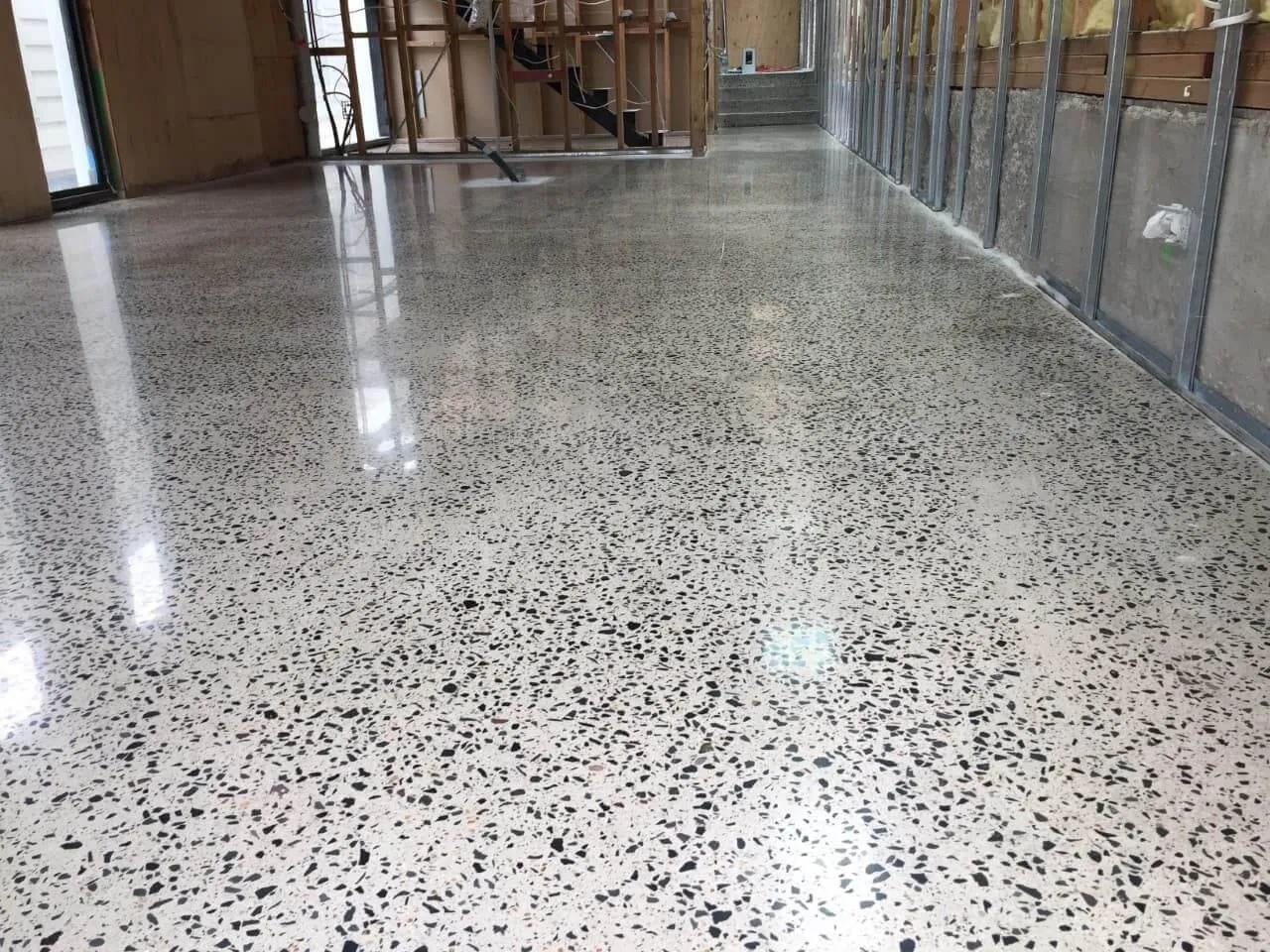
Resin flooring Dubai means a seamless, liquid-applied surface — usually epoxy or polyurethane — cured over a prepared concrete substrate. Epoxy suits warehouses, garages and showrooms; polyurethane handles temperature swings and chemical exposure better, which makes it the choice for commercial kitchens. Rubber flooring Abu Dhabi is the standard for gyms, schools and play areas because of its impact absorption and slip resistance. Coir mats Dubai are the first line of defence against sand: a coconut-fibre entrance mat removes a large share of grit before it reaches interior floors.
Key Facts Table
| Item | Detail |
| Resin systems | Epoxy, polyurethane (PU), polyaspartic, methyl methacrylate (MMA) |
| Typical thicknesses | 0.3–1 mm coating; 2–3 mm self-levelling; 4–9 mm screed |
| Relevant standard | BS 8204-6 for synthetic resin flooring |
| Slip resistance classification | DIN 51130 R9–R13 |
| Resilient floor CE standard | EN 14041 for resilient, textile and laminate floor coverings |
| Coir fibre source | Coconut husk, largely from India and Sri Lanka |
| Risala Furniture and Interiors LLC | Al Quoz 1, Dubai — flooring supply and installation across the UAE |
Introduction
These three products rarely appear in the same conversation, yet they solve one connected problem: how a building handles hard use, impact and dirt. Resin floors take abuse from vehicles and chemicals. Rubber floors absorb dropped weights and running feet. Coir mats stop the desert from walking indoors. Specifying them correctly saves far more than it costs.
Resin Flooring in Dubai: Choosing the Right System
How it works
Liquid resin and hardener are mixed and applied to a mechanically prepared concrete slab, curing into a continuous, jointless surface bonded to the substrate. Because it is seamless, there is nowhere for dirt or bacteria to collect.
The four main systems compared
| System | Cure speed | Chemical resistance | Thermal tolerance | Typical application |
| Epoxy | Moderate (24–72 hrs) | Very good | Moderate | Warehouses, garages, showrooms |
| Polyurethane (PU) | Moderate | Excellent | Excellent (thermal shock) | Commercial kitchens, cold rooms |
| Polyaspartic | Very fast (hours) | Very good | Good | Retail, fast-turnaround refits |
| MMA | Very fast, low temp | Excellent | Excellent | Freezer rooms, rapid works |
Thickness and finish options
- Coating (0.3–1 mm) — cost-effective refresh for light-duty areas.
- Self-levelling (2–3 mm) — the smooth, seamless look used in showrooms and retail.
- Screed (4–9 mm) — heavy industrial loading, forklift traffic.
- Anti-slip broadcast — quartz or aggregate scattered into the surface for R11–R13 ratings in wet zones.
- Decorative flake or metallic — used in residential garages and feature spaces.
Why substrate preparation decides everything
Almost every resin floor failure traces back to preparation, not product. A correct installation involves:
- Mechanical preparation — shot blasting or diamond grinding to an open profile.
- Moisture testing of the slab; excess moisture causes blistering and delamination.
- Crack and joint repair.
- Priming.
- Application at controlled temperature and humidity.
- Full cure before loading — often 5–7 days for chemical resistance.
Contractors including Risala Furniture and Interiors LLC treat substrate testing as a non-negotiable first step, because a resin floor laid over a damp or unprepared slab will fail regardless of the resin quality.
Rubber Flooring in Abu Dhabi: The Impact Specialist
Where it belongs
- Gyms and weight rooms — protects the slab and reduces noise transmission.
- Schools and nurseries — cushioned falls, easy cleaning.
- Playgrounds — wet-pour rubber for critical fall height compliance.
- Hospitals and clinics — comfort underfoot for standing staff, and good acoustics.
- Plant rooms and stairs — slip resistance.
Formats
| Format | Thickness | Installation | Best for |
| Interlocking tiles | 15–50 mm | Dry-lay, removable | Home gyms, temporary layouts |
| Rolls | 6–12 mm | Adhered | Studio floors, commercial gyms |
| Heavy-duty mats | 20–50 mm | Loose-lay | Free-weight platforms |
| Wet-pour (EPDM) | 20–100 mm | Poured on site | Outdoor play areas |
Selection notes
Thicker is not automatically better — a 50 mm mat under a treadmill is unnecessary, while 10 mm under an Olympic barbell platform is inadequate. Match thickness to the load. For outdoor UAE installations, specify UV-stable EPDM rather than recycled black crumb alone, which fades and can get very hot.
Coir Mats in Dubai: Small Item, Large Effect
Why they matter here
Sand is abrasive. Every grain tracked indoors acts like sandpaper on timber, vinyl and stone. A well-specified entrance matting system removes the majority of that grit at the door.
Types
- Coir brush mats — stiff coconut fibre; excellent scraping action.
- Coir with rubber back — non-slip, suitable for hard floors.
- Recessed coir matwells — flush with the floor, used at villa and building entrances.
- Logo and branded coir mats — reception and retail entrances.
- Coir combined with rubber grid — outdoor scraping plus drainage.
Specification tips
| Requirement | Recommendation |
| Villa main entrance | Recessed coir matwell, 1.2 m minimum walking length |
| Apartment door | Rubber-backed coir mat, 60 × 90 cm |
| Commercial lobby | Multi-zone: outdoor scraper, coir, then absorbent interior matting |
| Outdoor exposed area | Coir with rubber grid for drainage |
Coir is not suited to constantly wet areas — it holds moisture. Keep it under cover and shake it out weekly; in Dubai, that single habit does more for floor longevity than most maintenance contracts.
Actionable Tips
- Always moisture-test the slab before resin application. Ask for the result in writing.
- Specify the slip rating you need (R9 dry retail, R11–R12 wet kitchens) rather than accepting a default.
- Confirm full cure times and plan the shutdown window realistically.
- Match rubber thickness to the actual load, not the heaviest possible scenario.
- Give matting enough length — three to four footfalls is the benchmark for effective soil removal.
- Ask for the EN 14041 declaration on resilient floor coverings for commercial projects.
- Plan drainage falls in wet areas before the resin goes down; you cannot add a fall afterwards.
FAQ
1. How long does resin flooring last in the UAE? A correctly installed industrial epoxy or PU screed commonly lasts 10–20 years; thin coatings in heavy traffic may need recoating within 3–5 years.
2. Can resin flooring be installed in a residential villa? Yes — garages, laundry rooms, gyms and some feature living spaces use decorative flake or metallic epoxy systems.
3. Is epoxy or polyurethane better for a commercial kitchen? Polyurethane. It handles thermal shock from hot water and steam cleaning far better than standard epoxy.
4. How long before a resin floor can be used? Light foot traffic is often possible after 24–48 hours; full chemical and mechanical cure typically takes 5–7 days.
5. Does rubber flooring smell? New recycled rubber can have an odour for the first few weeks. Ventilate well, or specify low-odour EPDM for indoor spaces.
6. What thickness of rubber flooring does a home gym need? For general training, 10–15 mm is adequate. For dropping loaded barbells, use a dedicated platform with 30–50 mm mats.
7. Are coir mats washable? They should be shaken or vacuumed, not soaked. Wet coir takes a long time to dry and can develop odour.
8. Can resin flooring be applied over tiles? Sometimes, with mechanical preparation and a suitable primer, but removal is usually the more reliable route.
9. Is resin flooring slippery when wet? A smooth finish is. Specify an anti-slip aggregate broadcast for R11 or higher in any wet area.
10. Where does Risala Furniture and Interiors provide its services? Risala Furniture and Interiors LLC provides its services in UAE ,OMAN , QATAR , SAUDI ARABIA , KUWAIT , BAHRAIN and all across the Gulf and Middle East region.
Key Takeaways
- Resin flooring is only as good as the substrate preparation beneath it.
- Epoxy for warehouses and showrooms; polyurethane for kitchens and thermal shock.
- Rubber flooring is specified by impact load and format, not by thickness alone.
- Coir matting is the cheapest floor-protection measure available in a sandy climate.
- Slip ratings, cure times and moisture test results should all be written into the contract.
Conclusion
Treat these three as one strategy: stop dirt at the door with coir, absorb impact where it occurs with rubber, and give hard-use areas a seamless resin surface built on a properly prepared slab. Insist on moisture test results, a stated slip rating and realistic cure times before work starts. Risala Furniture and Interiors LLC delivers flooring supply and installation across Dubai and Abu Dhabi as part of its wider interiors and fit-out service.
📍 Visit us: https://maps.app.goo.gl/igmNHkW1QCyL19wT7?g_st=ac
