
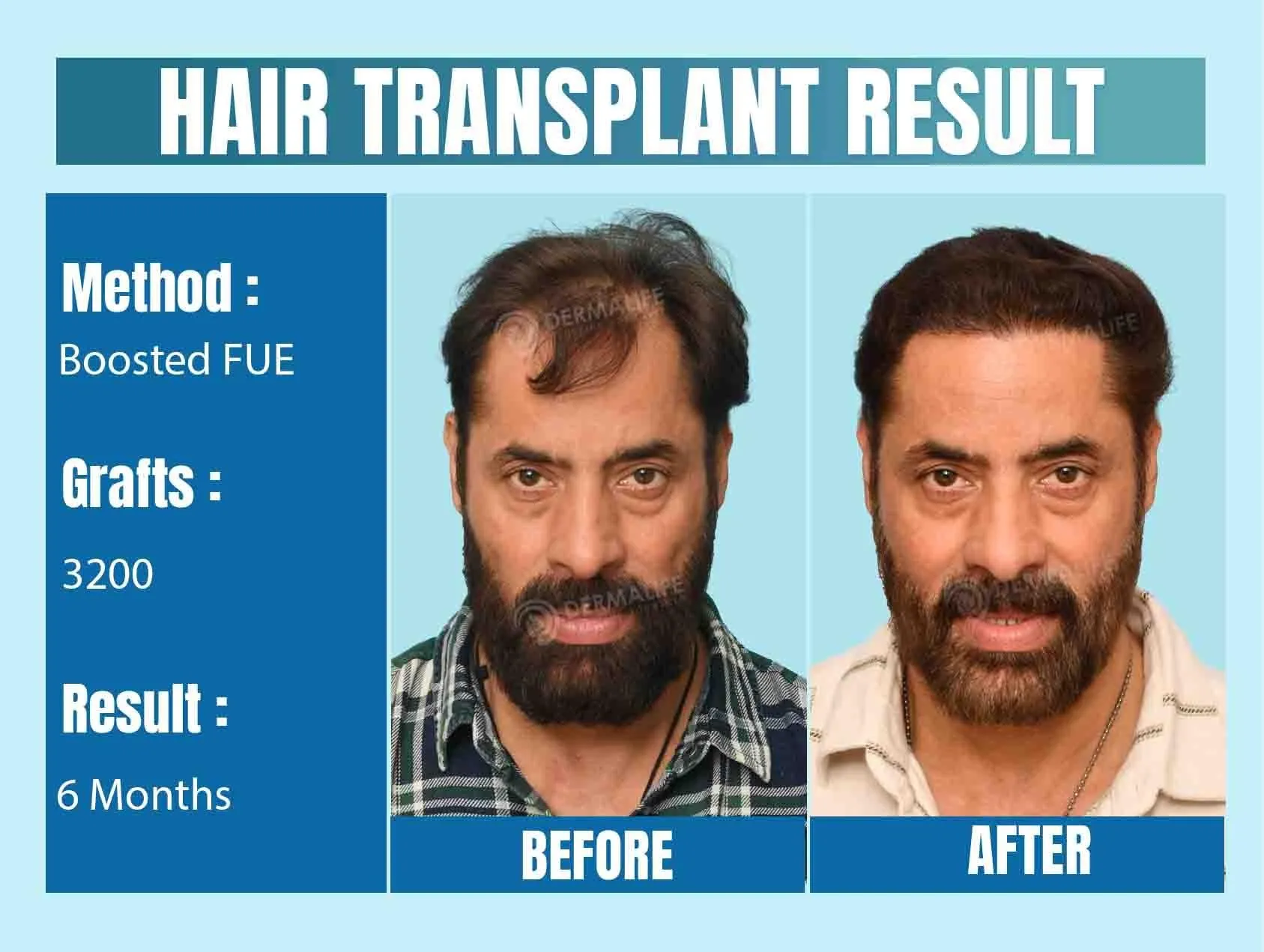
One of the biggest concerns among people considering hair restoration is whether their transplanted hair will look natural. A hair transplant may increase coverage in bald areas, but the final appearance depends on much more than the number of grafts.
Patients researching the best hair transplant clinic in Delhi often compare before-and-after photographs, surgeon experience, treatment techniques, and patient reviews. However, understanding what actually creates a natural-looking result is equally important.
What Makes a Hair Transplant Look Natural?
A natural hair transplant should blend with the patient’s existing hair rather than look like a separate patch of transplanted follicles. Several factors shape the final result.
1. Natural hairline design
The hairline is one of the most visible parts of a transplant. A natural hairline usually has subtle irregularities rather than an artificial straight edge.
The surgeon considers the patient’s facial structure, age, existing hairline, hair loss pattern, and future balding possibilities before planning its position.
2. Correct graft selection
Hair grows in naturally occurring follicular units containing different numbers of hairs. Single-hair grafts are generally important for creating a softer frontal hairline, while multi-hair grafts may be used in areas where greater density is required.
Appropriate graft selection helps create a gradual transition between the frontal hairline and the denser areas behind it.
3. Direction and angle of implantation
The direction of natural hair growth varies across the scalp. The frontal region, temples, and crown all have different growth patterns.
If transplanted hair is placed at an unsuitable angle or direction, the result may appear unnatural even when a large number of grafts have been used.
4. Donor area management
The donor area is a limited resource. Excessive extraction can create visible thinning or an uneven appearance at the back and sides of the scalp.
A responsible surgeon plans graft extraction according to donor density and the patient’s long-term hair restoration needs.
Why Do Some Hair Transplants Look Unnatural?
There can be several reasons for an unnatural appearance after transplantation:
- A hairline that is too low, straight, or dense.
- Incorrect placement of multi-hair grafts in the frontal hairline.
- Unnatural hair growth direction.
- Poor distribution of grafts.
- Excessive extraction from the donor area.
- Inadequate planning for future hair loss.
- Unsuitable treatment selection for the patient’s condition.
Some of these concerns may be addressed through corrective hair restoration, but correction is not always possible to the extent a patient expects. The remaining donor supply and condition of the scalp are important limitations.
How Should Patients Evaluate a Hair Transplant Clinic in Delhi?
When choosing a hair transplant clinic in Delhi, patients should assess the surgeon’s qualifications and experience rather than relying only on advertisements or online rankings.
Useful questions include:
- What are the surgeon’s medical qualifications?
- What specialised hair transplant training has the surgeon completed?
- Who performs the critical surgical steps?
- Can the clinic show genuine results from similar cases?
- How does the surgeon plan the hairline and donor area?
- What follow-up care is available after surgery?
Before-and-after photographs should ideally show consistent lighting, angles, and follow-up periods. Patients should also understand that results vary according to individual hair characteristics and medical factors.
Hair Restoration at Dermalife Skin & Hair Clinic
Dermalife Skin & Hair Clinic, located in Green Park Extension, South Delhi, provides hair restoration services under the direction of Dr. Gaurav Garg.
Dr. Garg completed his MBBS and MD in Dermatology and Venereology at Seth G. S. Medical College and KEM Hospital, Mumbai. His additional training includes hair transplant surgery in Israel, dermato-surgery at PGI Chandigarh, and advanced dermatology, dermato-surgery, and laser training at the National Skin Centre, Singapore.
The clinic offers FUE-based hair transplantation and its Boosted FUE approach. Other services include unshaven hair transplantation, corrective hair restoration, and beard hair transplant procedures.
Treatment recommendations are based on the patient’s hair loss pattern, donor hair availability, scalp condition, and expectations.
The Role of FUE and Boosted FUE in Natural Hair Restoration
FUE involves extracting individual follicular units from the donor area and implanting them into areas affected by hair loss.
Dermalife’s Boosted FUE is the clinic’s specialised approach to FUE extraction and graft handling. The technique is selected according to the patient’s suitability and treatment requirements.
Regardless of the technique, the natural appearance of the result depends on planning, graft selection, placement direction, and donor management. Patients should understand the actual surgical steps rather than choosing a clinic based solely on a procedure’s marketing name.
Can a Corrective Hair Transplant Improve an Unnatural Result?
Patients who have undergone an earlier procedure and are dissatisfied with the outcome may be candidates for corrective hair restoration.
The surgeon first identifies the reason for the unnatural appearance. Depending on the case, correction may involve refining the hairline, improving density, or addressing selected areas with visible scarring.
However, previous surgery may have reduced the available donor supply or affected the recipient area. A detailed assessment is therefore essential before recommending another procedure.
Final Thoughts
The most natural-looking hair transplant is not necessarily the one involving the highest number of grafts. It is the one planned according to the patient’s facial structure, hair characteristics, donor capacity, and long-term needs.
Patients searching for a hair transplant cost in Delhi should prioritise surgeon qualifications, relevant experience, genuine clinical results, and transparent treatment planning. A detailed consultation can help establish whether the proposed procedure is suitable and what outcome can realistically be expected.
